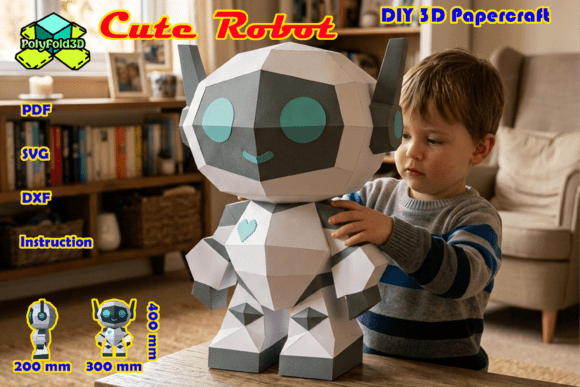
Cute Robot DIY 3D Papercraft: 3D SVG Objects for Branding
As a brand designer who has spent years helping local businesses establish their visual identity, I am always on the lookout for assets that do more than just fill space. I look for elements that tell a story, evoke emotion, and ultimately drive sales. Recently, I evaluated a specific graphic design asset known as Cute Robot DIY 3D Papercraft. At first glance, it might seem like a simple craft project or a toy, but when viewed through the lens of commercial design, it reveals itself as a versatile tool for modern branding.
This asset falls under the category of Objects and is available in a 3D SVG format, which is crucial for scalability and print quality. My review focuses on how this playful, intergalactic companion can be integrated into real-world small business projects, from packaging to social media campaigns.
The Mood and Personality of the Design
When you first encounter the Cute Robot DIY 3D Papercraft, the immediate impression is one of friendly innovation. It does not feel corporate or cold; instead, it radiates a sense of handmade charm mixed with futuristic curiosity. This duality makes it exceptionally suitable for brands that want to appear approachable yet forward-thinking.
The design suggests a brand personality that is playful, imaginative, and slightly whimsical. It works beautifully for businesses that value creativity over rigidity. Whether it is a boutique selling tech-inspired accessories, a children’s product line, or a creative workshop, this asset helps establish a warm, inviting atmosphere. It feels premium not because of luxury materials, but because of its clean lines and thoughtful composition. For a local business owner, this means your brand will stand out as unique and memorable, rather than generic.
Real-World Applications for Local Businesses
In my practice, I often advise clients to think beyond the logo. The true test of a brand is how it looks on a physical product or in a digital ad. Here is how Cute Robot DIY 3D Papercraft can transform various aspects of a small business’s presentation:
- Packaging Design: Imagine a box of artisanal chocolates or a skincare set featuring this robot. The 3D aspect adds depth, making the package pop on a shelf. It turns a simple container into an experience, encouraging customers to share photos online.
- Product Labels and Hang Tags: For handmade soaps or candles, this asset serves as a charming accent. It softens the label, making the product feel like a gift rather than a commodity.
- Social Media Graphics: In a crowded feed, a consistent visual theme builds recognition. Using this robot as a recurring character in your Instagram posts creates a narrative. Customers begin to associate the character with your brand’s values of fun and quality.
- Thank-You Cards and Inserts: Including a printed version of this papercraft in your shipping packages adds a delightful surprise. It enhances the unboxing experience, fostering customer loyalty and positive reviews.
- Event Marketing: If you are hosting a launch event or a market stall, large-scale prints of this asset can serve as eye-catching backdrops or interactive photo props.
Supporting Business Presentation and Trust
Using a cohesive graphic design asset like Cute Robot DIY 3D Papercraft supports stronger first impressions. When every touchpoint—from your website banner to your product mockups—features the same visual language, it signals professionalism. This consistency improves customer trust because the brand appears deliberate and well-crafted.
Furthermore, it aids in better product recognition. Over time, customers will associate the cute robot with your specific offerings. This emotional connection is vital for small businesses competing against larger corporations. By leveraging a distinctive illustration, you create a bond that goes beyond price or utility.
Strategic Placement and Visual Hierarchy
To maximize impact, strategic placement is key. This asset works best as a hero graphic on landing pages or as a decorative element on promotional banners. It draws the eye without overwhelming the message. However, visual hierarchy must be maintained.
Use the robot to frame important information, such as a sale announcement or a new product launch. Its shape naturally guides the viewer’s gaze toward the center of the design. For editorial design or web design, placing it alongside clean typography ensures that the text remains readable while the image adds character.
Where to Use It Carefully
Not every business fits this aesthetic. There are situations where Cute Robot DIY 3D Papercraft should be used with caution:
- Formal Corporate Branding: Law firms, financial institutions, or high-end legal services may find this asset too casual. It lacks the gravity required for serious industries.
- Very Small Labels: Due to its detailed 3D nature, the robot may lose clarity if scaled down too much on tiny ingredient labels or barcodes.
- Crowded Layouts: If your packaging already contains heavy text, ingredients, and legal disclaimers, adding this asset might create visual clutter. Keep the design breathable.
- Luxury Minimalist Brands: Brands that rely on stark minimalism and monochrome palettes might find the playful color and form of the robot distracting from their sleek identity.
Practical Designer Notes for Implementation
Before integrating this asset into your commercial design workflow, consider these technical checks:
- Test on Real Mockups: Never judge a design asset solely on a white background. Place the Cute Robot DIY 3D Papercraft onto realistic packaging mockups to see how it interacts with shadows, textures, and lighting.
- Check Black and White Usage: Ensure the design holds up in grayscale. This is essential for cost-effective printing options or stamp designs.
- Preview on Small Screens: Test how it appears on mobile devices for your social media graphics. Clarity at small sizes is non-negotiable for digital products.
- Color Compatibility: Experiment with your brand colors. Does the robot’s palette complement your existing scheme, or does it clash? Adjusting hues can help it blend seamlessly.
- Font Pairing: Try pairing the asset with different typefaces. A sans-serif font can modernize the look, while a handwritten font can enhance the playful vibe. Avoid using display fonts that compete for attention.
- Vector Editability: Since it is an SVG design, verify that you can edit the paths if needed. This allows for customization, such as changing colors to match seasonal campaigns.
- Commercial License: Always confirm the commercial license before using it for client work, business branding, or physical product sales. Some assets are for personal use only.
In conclusion, Cute Robot DIY 3D Papercraft is more than just a printable template. It is a powerful tool for small business branding that can elevate your packaging design, enhance your marketing visuals, and create a lasting emotional connection with your audience. By using it strategically, you can turn a simple object into a memorable brand icon.